
GTA 6–Inspired 3D Models: Vice City-Style Cars, Props & Characters with AI
Create neon-retro Vice City-style 3D assets inspired by GTA 6's launch—Miami-themed cars, beach props, stylized characters, and low-poly game assets for indie projects and 3D printing.
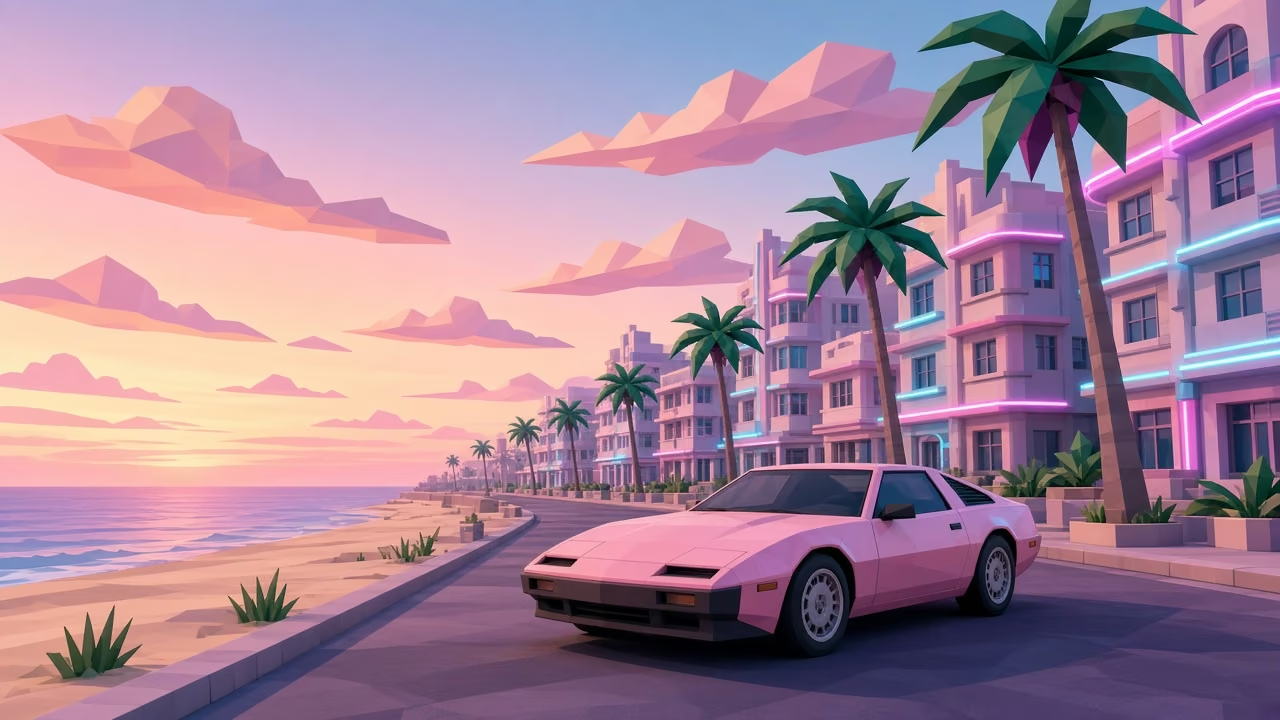
The launch of Grand Theft Auto VI on November 19, 2026 for PlayStation 5 and Xbox Series X|S has reignited worldwide interest in Vice City's signature neon-retro Miami aesthetic. According to Trendomap, "Grand Theft Auto VI" has trended 164 times in 56 countries since October 11, 2026, with UK peaks reaching 20,000+ searches. The phrase "gta 6" dominates search volumes globally (gta6record.com), and console preloads went live November 10, with First Pass calling the buildup "the dominant gaming story of the week."
For 3D creators, game developers, and hobbyists, this cultural moment is an opportunity to create Miami-inspired assets—retro sports cars, neon motel signs, palm-lined beach props, stylized fan-art characters, and low-poly game assets for indie open-world projects. With AI-powered tools like Sloyd's Text to 3D and Image to 3D, you can turn Vice City–inspired concepts into production-ready 3D models in minutes.
Why the GTA 6 Launch Matters for 3D Creators
🌴 A Visual Aesthetic That Resonates
The Vice City theme—neon-soaked nightlife, pastel Art Deco architecture, palm trees, and 1980s Miami vibes—has always been iconic in gaming. GTA 6's return to this setting brings fresh attention to that retro-futuristic style, inspiring fan projects, indie games, and creative work across the 3D community.
🎮 Opportunity for Indie Developers
Indie game developers working on open-world projects, racing games, or story-driven experiences can draw inspiration from the Vice City aesthetic without recreating licensed assets. Generic Miami-style props, vehicles, and environments fit a wide range of gameplay styles and can be customized to suit original worlds.
🖨️ 3D Printing and Display Models
Beyond games, the cultural moment creates demand for printable display models—stylized retro cars for desk decoration, character figures from fan art, and architectural miniatures inspired by Miami's Art Deco landmarks. These make great personal projects or conversation pieces.
💡 Speed and Accessibility
Traditional 3D modeling takes hours or days per asset. With AI generation, you can prototype dozens of Vice City–inspired models in an afternoon, iterate quickly, and export them in formats ready for game engines or 3D printers.
Creating Vice City-Style Characters from Fan Art
Fan art is a rich source of inspiration for stylized characters—whether they're generic street figures, beachgoers, or original protagonists inspired by Miami's culture. Sloyd's Image to 3D turns 2D concept sketches into textured 3D models.
What Works Best
- Front-facing or 3/4 view sketches: Clear character silhouettes with visible features convert most reliably
- Bold outlines and colors: Markers, digital paintings, or high-contrast illustrations
- Single-subject focus: Individual characters rather than complex group scenes
- Distinct features: Clothing details, accessories, hairstyles that define the character
Workflow: Fan Art to 3D Character
- Prepare the image: Scan or photograph your drawing with good lighting on a clean background, or use a digital illustration with the character isolated
- Upload to Sloyd Image to 3D: Drag the image into Sloyd's tool and wait for generation to complete (time varies by settings and queue load)
- Preview and refine: Rotate the generated model to verify proportions and detail; the AI interprets depth and adds dimension
- Export for your workflow: GLB or FBX for game engines and AR viewers; STL or OBJ for 3D printing
Note on printing for commercial use: Personal 3D printing is fine under Sloyd's terms. If you plan to sell physical prints (for example, on Etsy), you need a separate commercial 3D printing license. See Sloyd's Terms of Use, Section 6 for details.
Free users get 1 free generation per day. Unlimited generations, 4K textures, and commercial use require Sloyd Plus or Pro.
Building Retro Cars and Miami Props with Text Prompts
Vice City's visual identity includes pastel-colored sports cars, neon motel signs, beach umbrellas, palm trees, and Art Deco storefronts. Text to 3D generates these assets from written descriptions.
Example Prompts
Keep prompts generic and inspired by the aesthetic—not specific to licensed IP:
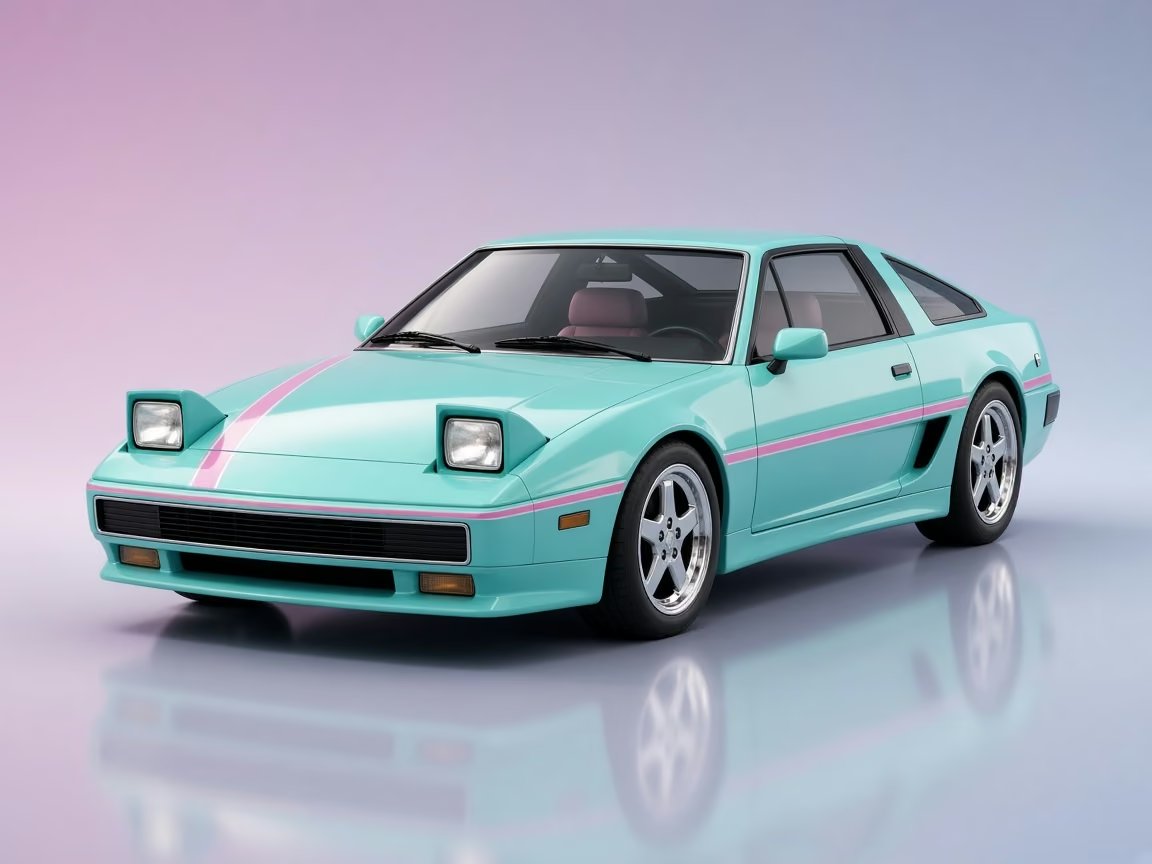
- Vehicles: "retro 1980s Miami-style convertible sports car, pastel pink, chrome details" or "boxy vintage sedan, turquoise paint, white wall tires"
- Signage: "neon motel sign, pink and blue glow, palm tree silhouette" or "retro diner sign with cursive lettering"
- Props: "beach lounge chair with striped umbrella, tropical vibe" or "vintage Miami Art Deco lamp post"
- Nature: "tall tropical palm tree, green fronds, sandy base" or "cluster of beach dunes with sea grass"
Text-to-3D Workflow
- Write a clear prompt: Describe the object's style, color, and key features in one sentence
- Generate in Sloyd: Enter the prompt in Sloyd Text to 3D; the AI builds a textured 3D model in a few minutes (time varies by settings and queue load)
- Iterate if needed: Adjust wording for better results—more specific details usually help
- Export for production: Download as GLB, FBX, USD, or other formats for Unity, Unreal, Blender, and more
The same export and commercial-use rules apply: free users get 1 free generation per day, and exports require Sloyd Plus or Pro.
Low-Poly Assets for Indie Open-World Projects
Not every game needs photorealistic detail. Low-poly, stylized assets inspired by Vice City's aesthetic fit perfectly in indie games, browser-based experiences, and mobile titles where performance matters.
Why Low-Poly?
- Faster rendering: Fewer triangles mean better frame rates on lower-end hardware
- Stylized charm: The simplified aesthetic has its own appeal, distinct from AAA realism
- Easier iteration: Generate multiple variations quickly and pick the best fit
Creating Low-Poly Vice City Assets
Many AI-generated models default to moderate polygon counts suitable for games. When exporting, you can further optimize them:
- Text-based generation naturally produces cleaner, simpler geometry than photogrammetry-based methods
- Export in FBX or GLB for direct import into Unity or Unreal
- Use your engine's LOD (level of detail) tools to create even lighter versions for distant objects
Examples of low-poly Vice City–inspired assets:
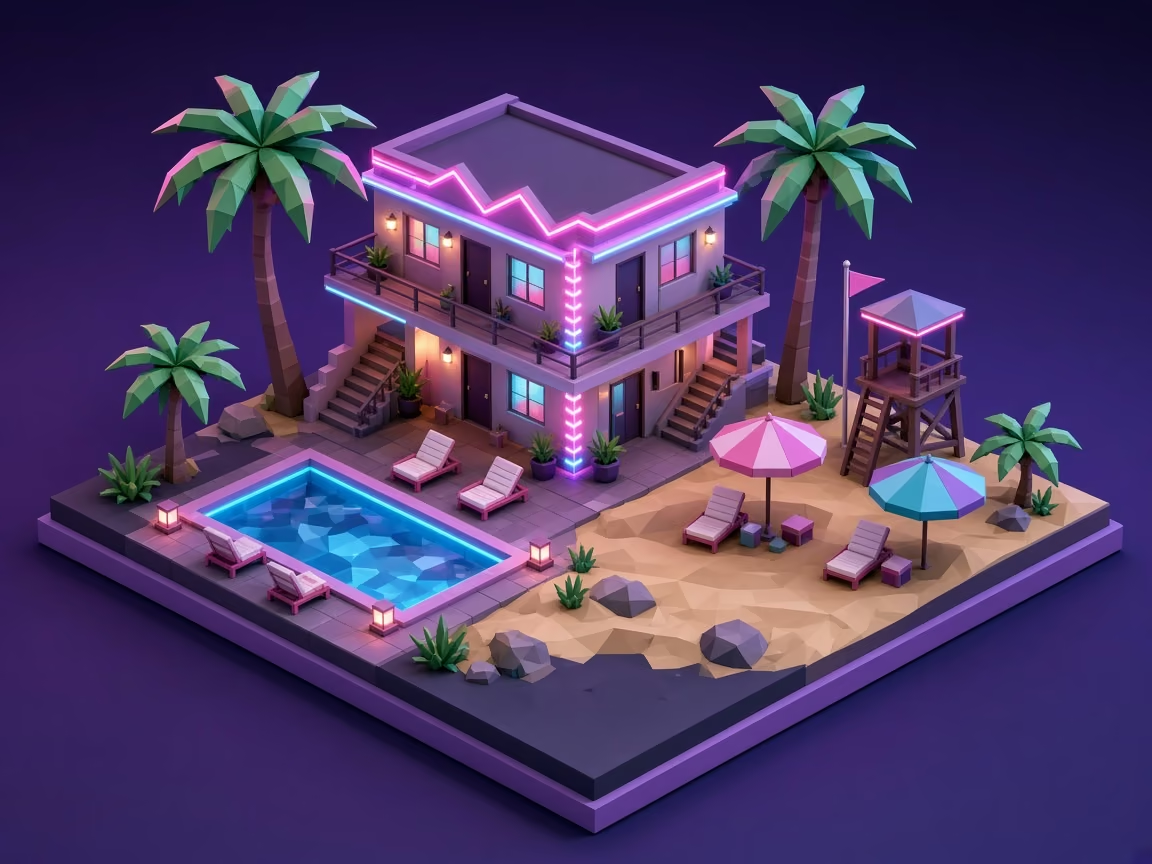
- Simple beach huts, lifeguard stands, and tiki bars
- Stylized palm trees and tropical foliage
- Basic city props like trash cans, benches, and street lights with a retro flair
- Generic background vehicles—sedans, convertibles, motorcycles
These assets work as background scenery, environmental storytelling elements, or placeholder art during prototyping.
Exporting for Game Engines and 3D Printing
Sloyd models export in multiple formats, so you can use them wherever you need.
For Game Engines and Digital Art
| Format | Best For |
|---|---|
| GLB | Unity, Unreal, Godot, web viewers; single-file package with textures |
| FBX | Maya, Blender, 3ds Max, game engines; animation-ready |
| USDZ | Apple ecosystem, AR experiences; includes textures |
| USD | High-end collaborative pipelines; geometry only (no textures) |
| OBJ + MTL | Legacy compatibility, widely supported across tools |
Formats with PBR materials (GLB, FBX, USDZ, OBJ + MTL) include UV-mapped textures. 4K textures are available with Sloyd Plus and Pro.
For 3D Printing
| Format | Best For |
|---|---|
| STL | Most FDM (filament) and resin printers; geometry only |
| OBJ | Widely supported; geometry only |
| 3MF | Modern slicers; geometry only (multi-material via slicer) |
Printing tips:
- FDM printers: Use 0.2mm layer height for decent detail without excessive print time
- Resin printers: Excellent for small character figures and detailed props
- Scale appropriately: Aim for at least 4-5cm in the smallest dimension for FDM; 2cm minimum for resin
Commercial printing reminder: Printing for personal use is fine. Selling prints commercially (like on Etsy or at conventions) requires a separate license under Sloyd's Terms of Use, Section 6.
Creative Project Ideas
For Game Developers
- Background vehicles: Populate your open-world streets with generic retro cars
- Environmental storytelling: Neon signs, beach props, and storefronts set the mood
- Placeholder assets: Generate quick stand-ins during prototyping, refine later
- Modular city blocks: Combine multiple props to build Miami-inspired neighborhoods
For 3D Printing Enthusiasts
- Desktop display models: Retro car miniatures painted in pastel Vice City colors
- Fan-art figures: Print characters from your own sketches and paint them
- Dioramas: Build a small Miami beach or neon-lit street corner scene
- Gifts: Custom models inspired by someone's favorite game aesthetic
For Portfolio and Practice
- Style studies: Explore the neon-retro aesthetic in your own work
- Rendering practice: Use the models in Blender or Unreal for lighting and composition studies
- Tutorial content: Show your process of generating and customizing these assets
Tips for Best Results
Be specific, not generic: Instead of "car," describe "boxy 1980s sedan with chrome bumpers and turquoise paint"
Iterate quickly: The generation is fast, so try multiple prompts and pick the best result
Combine assets: Mix generated models with your own work for a unique style
Check lighting in your scene: Vice City aesthetics shine with dramatic neon lighting and sunset palettes
Respect IP boundaries: Draw inspiration from the aesthetic, not from specific Rockstar assets, logos, or trademarked characters
Cultural Moments and Creative Opportunity
The GTA 6 launch is a short-lived spike in global interest—search trends peak around release and taper off over the following weeks. That makes now an ideal time to create Vice City–inspired assets while the aesthetic is top of mind and audiences are engaged.
Whether you're building an indie game, printing display models, or exploring a new art style, AI-powered 3D generation lets you participate in this cultural moment without spending days on manual modeling. With Sloyd's Text to 3D and Image to 3D, the tools are accessible, the workflow is fast, and the results are production-ready.
Start with a simple prompt—a neon sign, a pastel car, a palm tree—and see where the inspiration takes you. The Vice City aesthetic is timeless, and the models you create today can live on in your projects long after the launch hype fades.