How to Create a 3D Model From Photos
Transform photos into 3D models instantly with AI. Use Sloyd's image-to-3D tool for games, 3D printing, and more. Free and easy.

Ever looked at a photo of a vintage camera, a cool sneaker, or a unique piece of furniture and wished you could just grab it out of the screen and drop it into your video game or 3D scene?
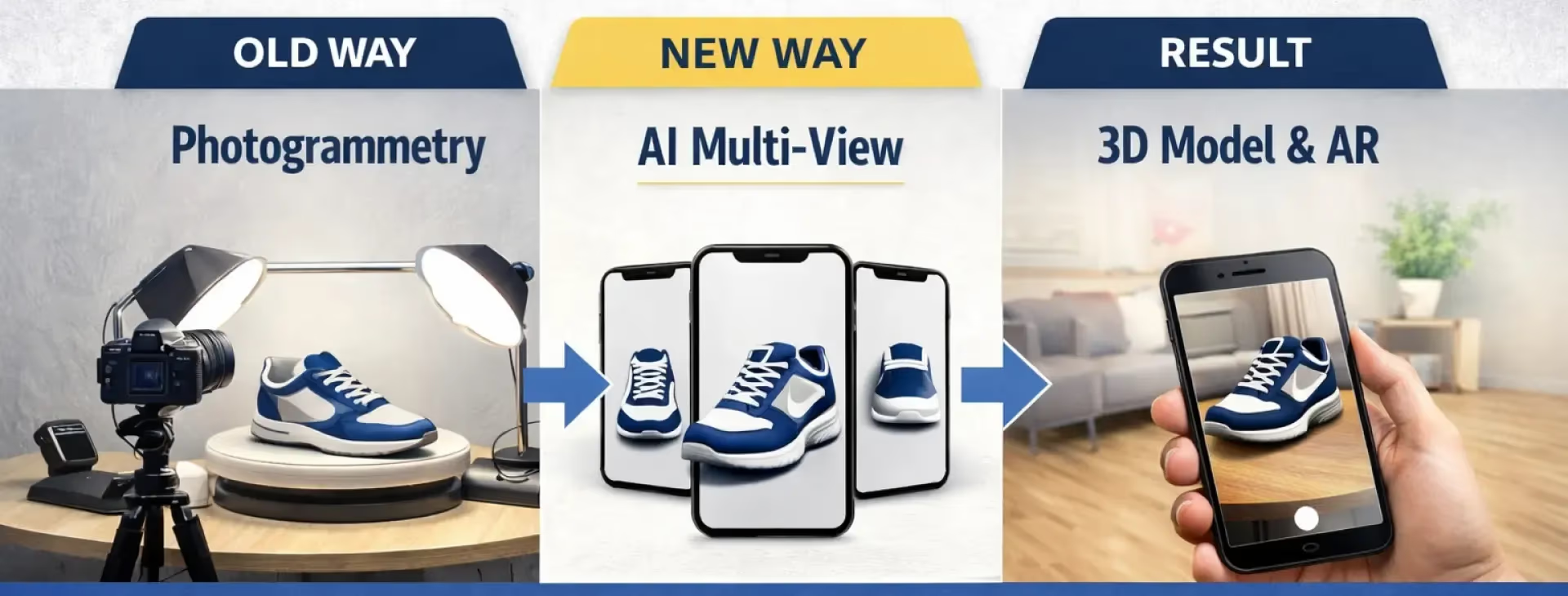
For years, the answer to that wish was "learn photogrammetry." And if you’ve ever tried photogrammetry, you know it involves taking hundreds of photos from every conceivable angle, buying expensive software, and waiting hours for a render that might still end up looking like melted wax.
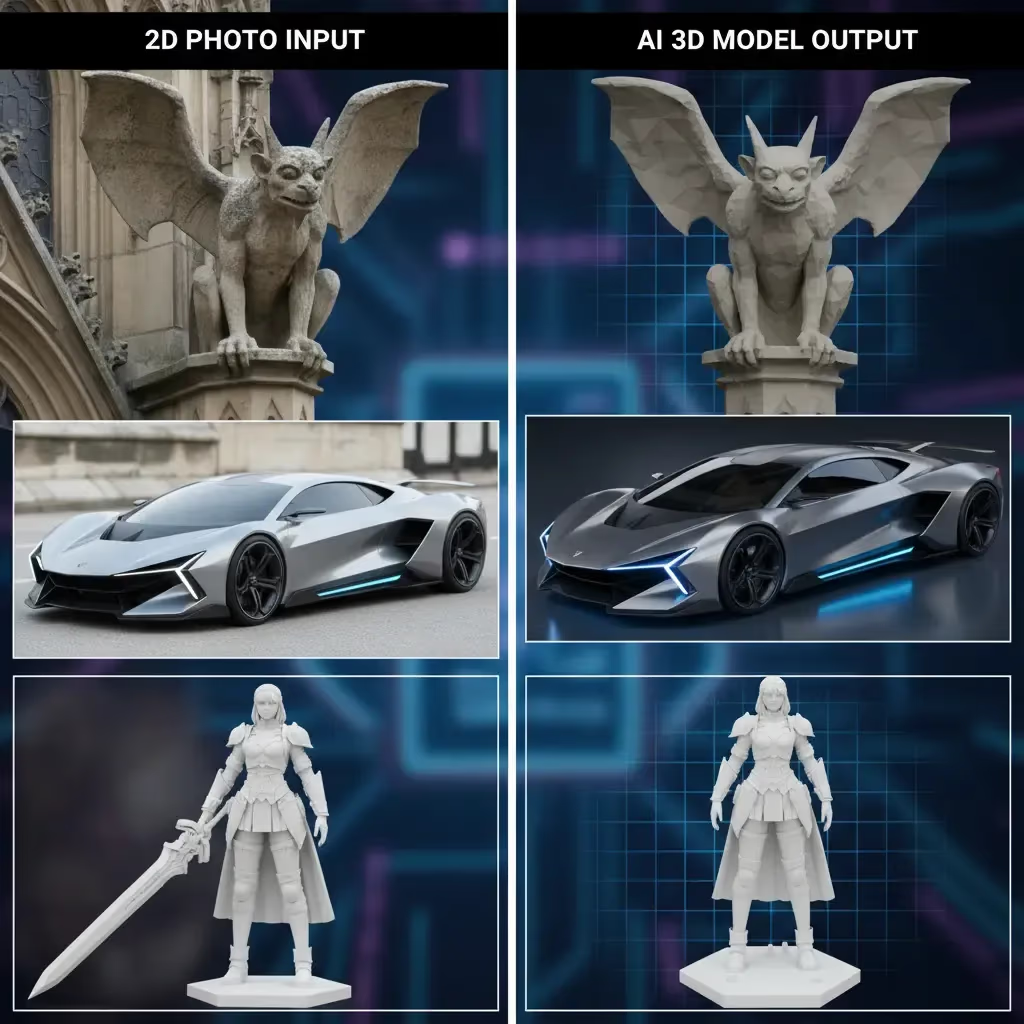
But the game has changed. With the rise of generative AI, turning a single 2D photo into a fully textured 3D model is no longer a weekend project—it’s a matter of seconds. Whether you are an indie game developer, a 3D printing enthusiast, or just a creator looking to speed up your workflow, AI-powered image-to-3D tools are the solution you’ve been waiting for.
Here is how you can transform your static images into dynamic 3D assets instantly, and why Sloyd is leading the pack in this revolution.
The Magic of Image-to-3D
The concept is simple: you feed an AI a 2D image, and it predicts the depth, volume, and texture of the object to construct a 3D mesh. This technology bridges the gap between concept art and playable assets. Instead of modeling a prop from scratch using complex software like Blender, you can simply sketch it or find a reference photo and let the AI do the heavy lifting.
How to Create a 3D Model From Photos with Sloyd
Getting started with Sloyd’s Image-to-3D tool is incredibly straightforward. You don't need a degree in 3D design, and you definitely don't need a powerful rendering rig. Since Sloyd is web-based, everything happens in the cloud.
Here is the step-by-step process:
- Launch the App: Head over to the Sloyd web app.
- Upload Your Image: You can drag and drop your photo or paste it directly from your clipboard.
- Choose Your Settings: This is where Sloyd shines. You aren't just getting a generic blob. You can select specific optimization modes:
- Low Poly: Perfect for game devs who need performant assets.
- High Quality: Great for renders and detailed scenes.
- 3D Print: Ensures the model is watertight and ready for slicing.
- Generate: Hit the button and watch the magic happen. In moments, your 2D image is now a rotatable, textured 3D object.
| Optimization Mode | Best Use Case | Key Benefit |
|---|---|---|
| Low Poly | Game Development | High performance, lower vertex count for real-time engines |
| High Quality | Renders & Visual Art | Maximal detail and texture resolution for static scenes |
| 3D Print | Physical Manufacturing | Watertight mesh structure ready for slicing software |
Once you are happy with the result, you can download the model. If you plan on 3D printing your creation, you can even use Sloyd’s handy image to STL converter tools to ensure the format is perfect for your printer.
Pro Tips for Better Results
While the AI is powerful, the quality of your output often depends on the quality of your input. To get the crispest, most accurate models, keep these tips in mind:
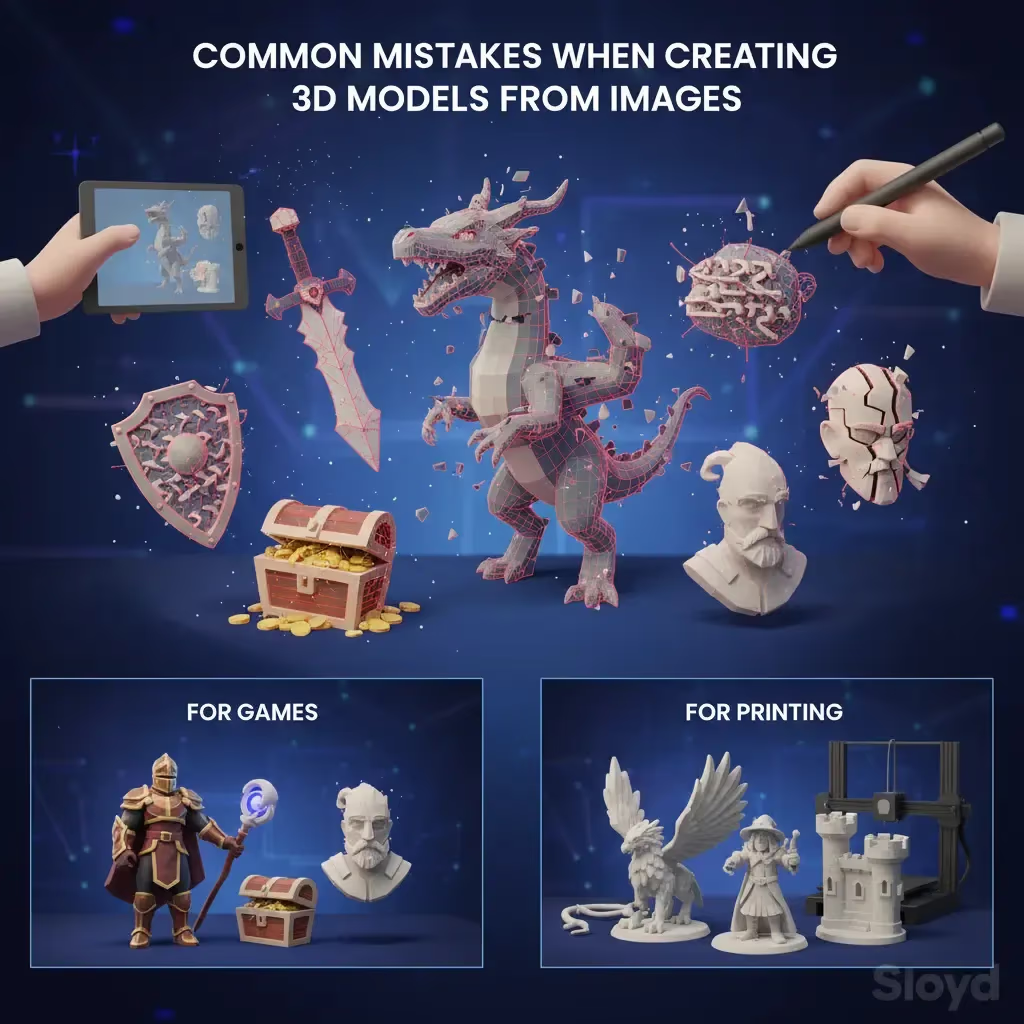
- Lighting is Key: Use evenly-lit photos. Deep shadows can confuse the AI, making it think a shadow is part of the object's shape.
- Clean Backgrounds: A solid white or neutral background helps the AI distinguish the object from the scenery.
- One Object at a Time: Don't upload a picture of a cluttered desk. Crop the image so the single object you want to model takes up most of the frame.
- Avoid Transparency: Glass and transparent plastic are notoriously difficult for AI to interpret. Stick to solid, opaque objects for the best results.
- Angle Matters: Straight-on angles usually provide clearer geometry than extreme top-down or worm's-eye views.
Why Sloyd Stands Out Among 3D Tools
If you search for "free 3D modeling tools," you will find a crowded market. Competitors like Meshy and others offer similar image-to-3D capabilities. However, when you look closer at the workflow and value, Sloyd quickly rises to the top 3, if not the #1 spot, for a few key reasons.
| Feature | Sloyd | Typical AI Competitors |
|---|---|---|
| Generations Cost | Unlimited (Daily Driver) | Credit-based / Pay-per-model |
| Technology | Hybrid (AI + Parametric Templates) | Pure Generative AI |
| Topology Control | Selectable (Quads vs. Triangles) | Often messy or random |
| Workflow | Iterative & Editable | "One-shot" generation |
1. Unlimited Creativity vs. Credit Anxiety
Most AI 3D generators operate on a credit system. You get a handful of free credits, and once you burn through them experimenting with prompts, you have to pay up. This kills creativity because you become afraid to "waste" a generation on a risky idea.
Sloyd takes a different approach. The platform is designed to be a daily driver for creators, offering unlimited generations. You can iterate, experiment, and refine your models as many times as you want without watching a credit counter tick down to zero.
2. The Hybrid Advantage: AI + Templates
This is Sloyd's secret weapon. Pure generative AI is amazing, but sometimes it hallucinates or struggles with precise geometric shapes.
Sloyd is not just a "text-to-3D" or "image-to-3D" toy; it is a comprehensive platform that includes a Template Editor. If the AI generation isn't exactly what you envisioned, you can switch to the parametric generator. Need a specific type of sword, a sci-fi crate, or a medieval building? You can use Sloyd's customizable templates to build exactly what you need with mathematical precision. This combination of "wild" generative AI and "controlled" parametric modeling gives you a wider range of services than competitors who rely on AI alone.
3. Production-Ready Assets
Sloyd understands that a 3D model is useless if it breaks your game engine. The platform allows you to toggle features like "T-Pose" for characters (essential for rigging) and control topology (Quads vs. Triangles). Whether you are using Unity or Unreal Engine, the assets you download are built to work.
Unlock Your 3D Potential
Creating 3D models from photos used to be a barrier that kept many creatives from entering the world of 3D design. Now, it’s a doorway. By using tools like Sloyd’s Image-to-3D and Text-to-3D, you can populate your worlds, print your ideas, and prototype faster than ever before.
Don't let your ideas stay flat. Snap a picture, upload it, and start building.