


FAQ
You can generate as many 3D models as you need. Sloyd is designed for iteration and exploration, so you don’t need to manage credits while refining ideas.
Yes. Sloyd supports text-based 3D generation in two ways.
You can generate fully AI-created 3D models from text prompts, or use text to guide and customize parametric templates when you need more predictable, game-ready results.
Yes. Sloyd uses generative AI for both 3D creation and image creation.
In addition, Sloyd combines AI with parametric templates to give you more control over geometry, faster iteration, and results that are easier to refine and reuse compared to fully black-box generation.
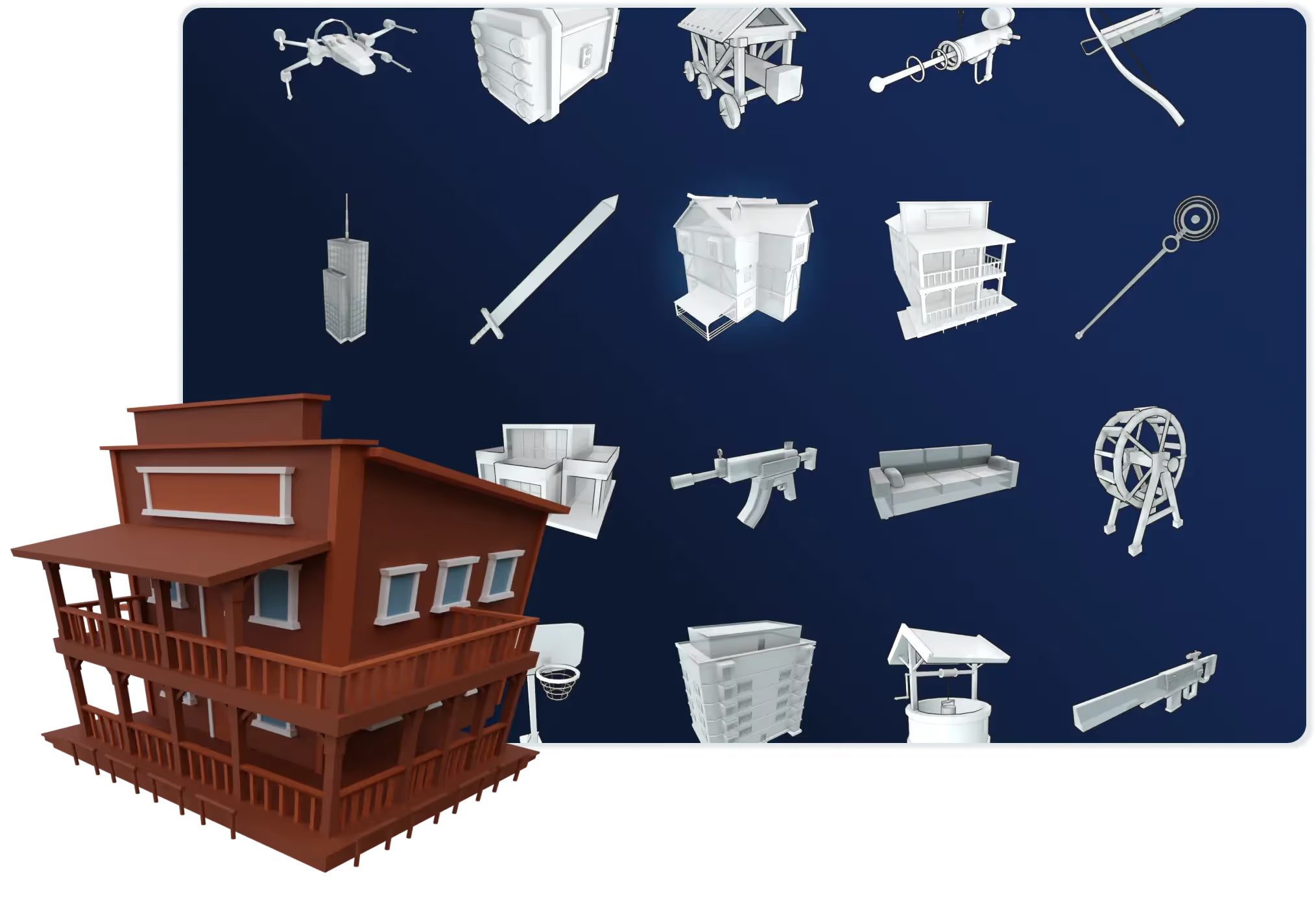
Sloyd’s templates are handcrafted, parametric 3D models that can be customized using simple controls or AI assistance.
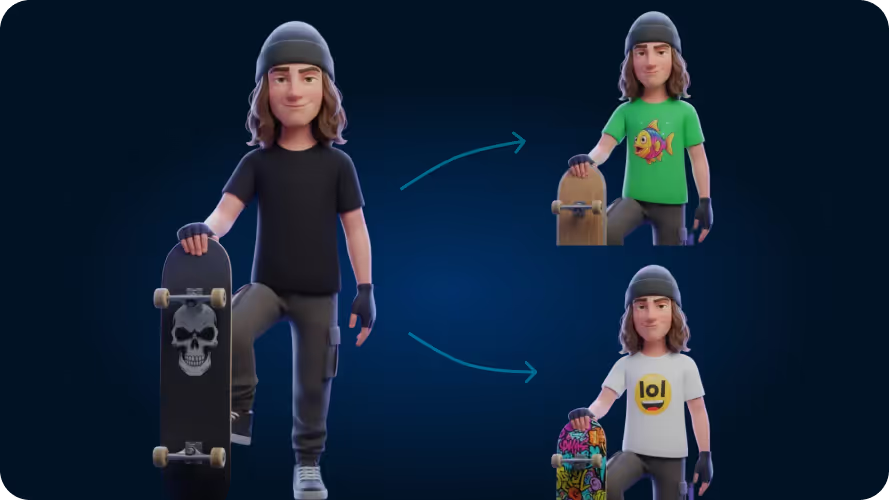
Templates are designed for consistency and control, making them ideal for creating variations, optimized assets, and models intended for real production use.
Yes. Sloyd runs entirely in your browser. There is no software to install, and you can start creating 3D models immediately.
This makes Sloyd suitable for quick experimentation as well as longer creative workflows.
Use text to 3D when you want to explore ideas quickly, image to 3D when you already have a visual reference, and templates when you need precise control or multiple variations.
You can switch between methods freely depending on your project.
You can create a wide range of 3D models, including props, characters, creatures, furniture, buildings, and other objects used in games, prototyping, and 3D printing. Sloyd works best for single objects rather than large scenes.
You can generate models from text prompts, images, or start from customizable templates depending on how much control you need.
Yes. You can upload a photo, sketch, or reference image and generate a textured 3D model based on its shape and proportions.
This is useful when you already have a visual direction and want to bring it into 3D quickly.
When you use text to 3D inside the Template Editor, Sloyd uses AI to assemble models from a library of parametric 3D parts created by professional artists and the community.
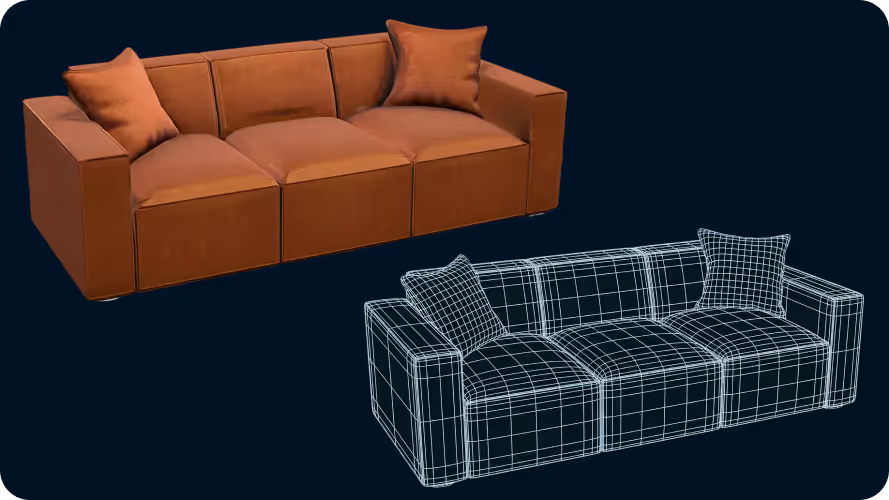
This approach allows Sloyd to generate optimized topology and consistent results in seconds, while still giving you control over the final shape and details.